

Steel Building Delivery
Practical guidance on delivery access, offloading, site preparation and what to expect when your ESB building arrives.
THE DELIVERY PROCESS
From Our Factory to Your Site
Once the building specification and drawings are approved, ESB coordinates manufacture, packing and transport through to the agreed delivery location.
Manufactured
Your building components are manufactured to the approved drawings and confirmed specification.
Carefully Packed
The frame, cladding, flashings and associated components are organised and packed ready for transport.
Transport Arranged
ESB books the delivery vehicle and confirms the expected delivery arrangements with you.
Delivered to Site
The building package arrives at the agreed location, ready for safe offloading by the customer or appointed erector.
DELIVERY RESPONSIBILITIES
Who Arranges What?
ESB coordinates transport to the agreed delivery location. The customer prepares the site and normally provides the equipment and labour needed to unload safely.
ESB Arranges
-
Manufacture and packing of the agreed building package
-
Booking the appropriate delivery vehicle
-
Delivery to the confirmed address
-
Communication of the expected delivery arrangements
-
Project-specific transport planning where agreed
Customer Prepares
-
Suitable hard access for the delivery vehicle
-
A safe unloading and turning area
-
Appropriate unloading plant and a competent operator
-
Any additional labour required during unloading
-
Coordination with the appointed erector where applicable
Any different arrangement must be confirmed with ESB before delivery is booked.
SITE ACCESS
Delivery Vehicles and Site Access
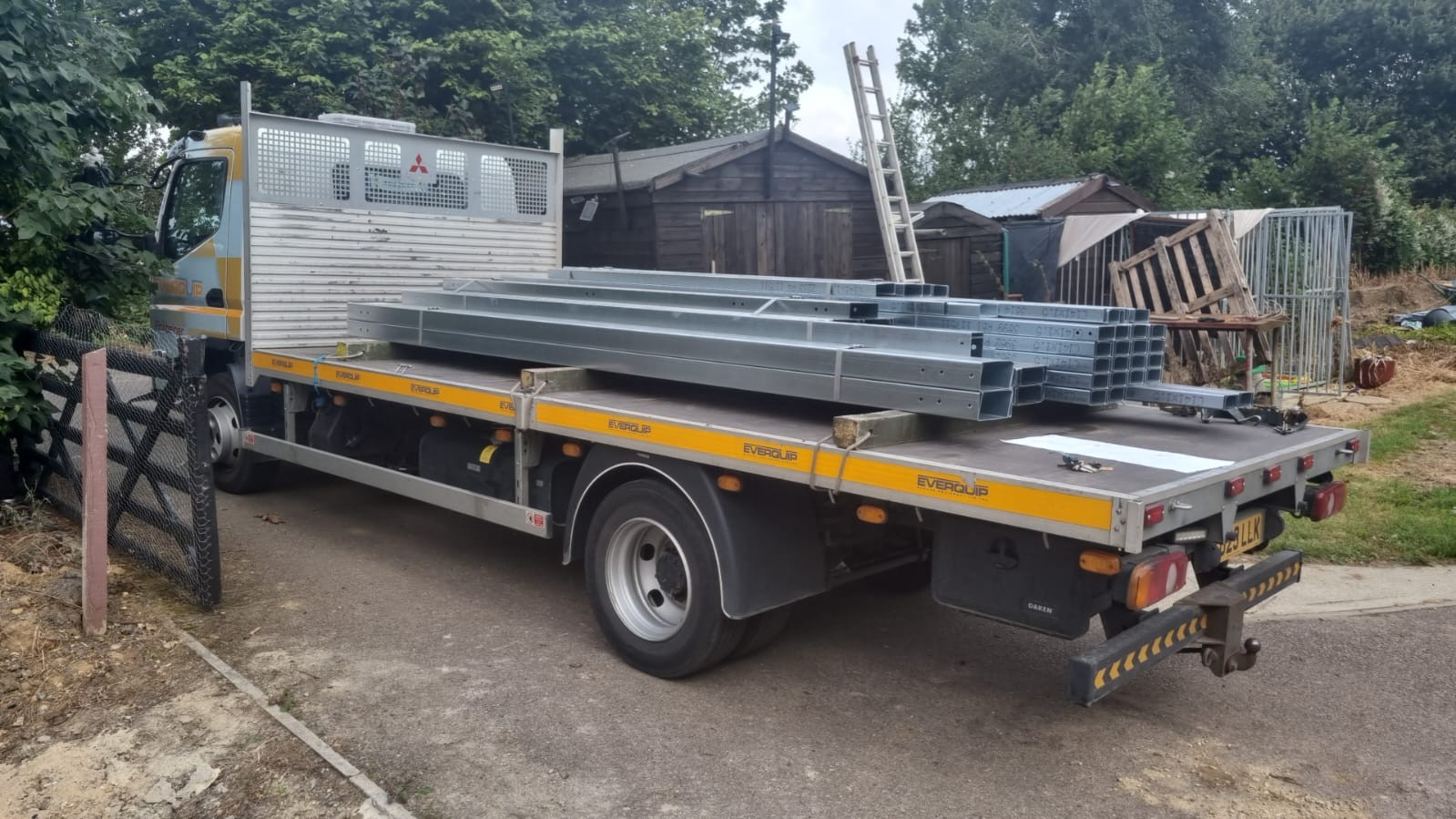
A steel building package contains long, heavy components and will normally arrive on a large rigid or articulated delivery vehicle. Before transport is booked, the customer must confirm that the route and site can accommodate the expected vehicle safely.
-
Firm, suitable access from the public highway
-
Adequate entrance width and height clearance
-
Space for the vehicle to manoeuvre and leave safely
-
No unreported weak bridges, weight limits or restricted roads
-
No obstructing gates, trees, arches or overhead cables
-
A firm and reasonably level unloading and storage area
-
A responsible site contact available for the delivery
Tell ESB about restricted access as early as possible. A smaller vehicle, alternative delivery arrangement or additional transport cost may need to be considered.

OFFLOADING OPTIONS
Planning How the Building Will Be Unloaded
The customer normally provides suitable plant and labour to unload the building. The right arrangement depends on the package size, site conditions and whether an erection team is already attending.
Customer-Arranged Plant
A suitable telehandler, forklift or crane can be hired locally with a competent operator. This is normally the most practical option and often provides plant that can remain available during erection.
Erector-Assisted Offloading
Steel erectors will often unload the package where this has been agreed as part of their work. Confirm the delivery date, unloading responsibility and required plant directly with the appointed team.
Moffett Delivery by Request
ESB can request a vehicle fitted with a Moffett-mounted forklift where available. This is a specialist and substantially more expensive transport option, so it must be priced and agreed in advance.
Handballing (Manual Offloading)
Not normally recommended.
Steel components and cladding sheets can be long, heavy and difficult to handle safely.
Mechanical offloading should be arranged wherever reasonably possible.
DELIVERY CHECKLIST
Prepare the Site Before Delivery
A little preparation prevents most delivery-day problems. Confirm the access, offloading arrangements and site contact before the transport booking is finalised.
Before Delivery Is Booked
-
Confirm the complete delivery address and site postcode
-
Provide the name and number of the delivery-day contact
-
Tell ESB about access restrictions or local weight limits
-
Agree who will provide the unloading plant and operator
-
Coordinate the expected delivery with the appointed erector
-
Confirm any ferry, timed-access or specialist transport requirements
Before the Vehicle Arrives
-
Clear the entrance and delivery route of obstructions
-
Prepare a firm, level unloading and storage area
-
Have the agreed unloading plant and operator ready
-
Provide suitable timber bearers for safely storing components
-
Keep cladding, fixings and smaller items organised and protected
-
Ensure the site contact can receive and check the delivery documents
ON DELIVERY
When Your Building Arrives
Check the visible condition of the package and the accompanying delivery information before or during offloading. A complete component-by-component inspection may not be possible while the vehicle is waiting, but the delivered materials should be checked promptly afterwards.
Photograph any visible damage before moving the affected items, record concerns on the delivery paperwork where possible and notify ESB as soon as reasonably practicable. Building materials should be stored safely, supported off the ground and protected until erection begins.
Delivery-Day Checks
Compare the delivered bundles and packages with the available paperwork
Inspect packaging, cladding edges and visible components for damage
Photograph the load before and during offloading
Record any obvious shortage or damage on the delivery note
Keep labelled components, fixings and smaller items together
Report any shortage or visible damage promptly and within seven days
Avoid leaving cladding or components directly on wet or uneven ground
SPECIALIST LOGISTICS
Restricted, Ferry and Overseas Deliveries
Standard delivery arrangements are based on access to an agreed UK mainland site unless the quotation states otherwise. Ferry crossings, restricted-access locations, timed deliveries and specialist vehicles may require additional planning and cost.
ESB can also assess overseas and other specialist projects. The building package, transport route, port or ferry arrangements, local site access and destination requirements must be considered before the delivery price and scope can be confirmed.
Tell Us Early If:
The site is reached by ferry
Access is narrow, steep or weight-restricted
A smaller or specialist vehicle may be required
The delivery must arrive within a fixed time window
The project is outside mainland Great Britain
Goods require onward transport or export coordination
Any exceptional transport requirement will be identified and agreed wherever possible before the order proceeds.
SPECIALIST LOGISTICS
Coordinate Delivery With Your Erection Plan
ESB buildings are supplied on a supply-only basis, but we can introduce experienced independent erection teams where required. Customers may also appoint their own erector or choose self-assembly with ESB guidance and support.
Where an erection team will unload the building, this must be agreed with them in advance. Coordinating the delivery, unloading plant and erection programme can avoid unnecessary hire costs and reduce the time materials remain stored on site.
DELIVERY QUESTIONS
Steel Building Delivery FAQs
Quick answers to the most common questions about transport, access and unloading.
-
Is delivery included in the building quotation?
Delivery to the agreed UK mainland location is normally included where stated in the written quotation. Ferry charges, overseas transport, restricted access and specialist delivery requirements are additional unless expressly included.
-
Is the delivery date guaranteed?
Delivery dates are estimates until manufacture and transport have been coordinated. ESB will confirm the expected arrangements, but timings can be affected by production, vehicle availability, weather, traffic and matters outside our reasonable control.
-
Who is responsible for unloading the building?
The customer normally provides suitable unloading equipment, labour and a competent operator unless ESB has expressly agreed otherwise. An appointed erection team may unload the package where this has been arranged directly with them.
-
What equipment is needed for offloading?
The appropriate equipment depends on the package size, component lengths and site conditions. A suitable telehandler, forklift or crane is commonly used. The required capacity and reach should be confirmed with the plant provider or appointed erector.
-
Can ESB arrange a Moffett or specialist delivery vehicle?
Yes, where available. A Moffett-equipped vehicle, smaller vehicle or other specialist arrangement can be requested, but it is usually considerably more expensive than standard transport and must be quoted in advance.
PLANNING YOUR DELIVERY?
Tell Us About Your Site and Access
Share your building location, access conditions and intended erection arrangements so we can plan the appropriate delivery with your quotation.
Prefer to talk?
Call ESB Sales on 0800 009 6985